
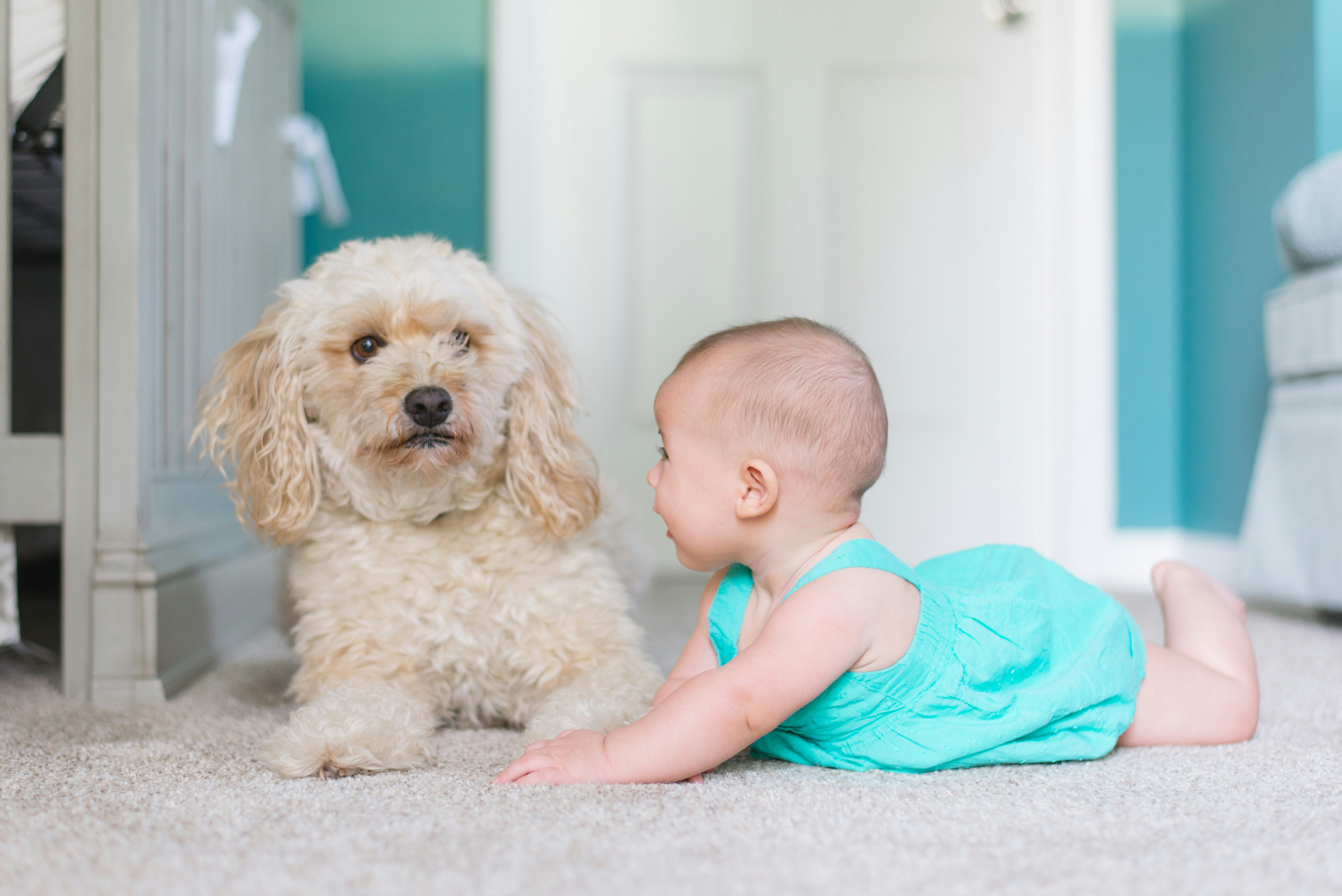
Congratulations, you are having a baby! This is an exciting and joyful time for you, filled with anticipation and planning. However, it can also come with a fair share of unsolicited advice and concerns from well-meaning family members. I still remember the day well-meaning family and friends asked if I was getting rid of my three pets because I was expecting a baby. At that time, I had worked in animal welfare for several years, so it surprised me to get these questions. Why would they think I need to get rid of my pets?
I soon realized the people asking me this question did not have pets, so they couldn’t appreciate my strong bond with my furry family. Some people, however, had read articles about dogs attacking children and assumed the likelihood of these incidents was high. These news reports often sensationalized the story by noting a particular breed never taking into consideration that most of these dogs are “resident” dogs who had not received much, if any, training or socialization, or had been left alone with a baby and were somehow triggered.
In the U.S., there are 30 to 50 fatal dog attacks annually. With a population of 86.9 million owned dogs in the U.S., that comes to a .00000067% chance of it ever happening. So, unless you have a dangerously aggressive dog, there is no reason to give up your pets – no matter the breed. Here’s why and five strategies to reassure those well-meaning family and friends.
- Acknowledge their concerns.
If the person giving advice is someone you are close to and you want to allay their fears, acknowledge their concerns. This can help them feel heard and respected. Sometimes, a simple conversation is all it takes, but it did take me my entire pregnancy and then a few months afterward to finally convince some family members to stop worrying about my pets and the new baby. Communicate openly and honestly about your plans and preparations for integrating your pets and your new baby into your family life. Sharing your strategies for supervision, training, and creating a safe environment can reassure your loved ones and demonstrate your commitment to ensuring a harmonious household for everyone.
- Demonstrate your preparedness.
To demonstrate your preparedness, showcase the steps you’re taking to ensure a harmonious household for both your baby and your pets. This could include:
- Installing baby gates to control access to the baby’s room, ensuring a safe and secure environment.
- Enrolling your dogs in obedience training classes to reinforce basic commands and promote good behavior around the baby.
- Establishing clear supervision plans, such as always keeping the baby and pets under direct supervision when they are together, to ensure dogs are not triggered by unexpected behaviors.
- Setting up a nursery monitor to keep an eye on the baby while attending to other household tasks, ensuring constant supervision even when in separate rooms.
- Creating designated pet-free zones within the house, such as the baby’s play area or sleeping area, where pets are not allowed to enter, to provide a safe space for the baby to play and rest without any interference from the pets.
These concrete examples showcase your proactive approach to integrating your pets into your growing family and emphasize your commitment to ensuring the safety and well-being of both your baby and your pets.

- Highlight the benefits of pets and babies growing up together.
- Research indicates that children who grow up with pets often exhibit greater empathy. Caring for pets can instill responsibility and compassion in children, fostering positive character development as they mature.
- Children raised in households with pets are less prone to developing airborne allergies. While pet ownership doesn’t completely eliminate allergy risks, studies suggest that exposure to pets early in life may reduce the likelihood of developing allergies later on.
- In addition to promoting empathy and responsibility, the bond between pets and babies offers a multitude of benefits. Growing up with pets encourages physical activity, as children engage in play and outdoor activities with their furry friends, promoting a healthy lifestyle and reducing the risk of childhood obesity.
- Pets provide emotional support, offering comfort and companionship during times of stress or sadness.
- Interacting with pets helps children develop essential social skills, such as empathy, communication, and cooperation, while also fostering confidence and self-esteem through the responsibility of caregiving.
- Furthermore, spending time with pets has been shown to reduce stress levels and feelings of loneliness in both children and adults. Ultimately, the relationship between pets and babies provides a unique and enriching experience, filled with love, companionship, and invaluable life lessons.
- When they worry about pit bull-type dogs harming the baby.
When it comes to worrying about pit bull-type dogs harming a baby, it’s crucial to understand that breed alone is not the determining factor in a dog’s behavior. Instead, it’s about how the animal was raised, trained, or the lack thereof, and what triggers may affect any dog, regardless of breed. Serious dog attacks are not inherently linked to a specific breed. Rather, various factors, including socialization, training, and individual temperament, play significant roles in a dog’s behavior. It’s essential to recognize that any dog, regardless of breed, may exhibit aggression if provoked or triggered.
Understanding canine body language and recognizing signs of stress or discomfort can help prevent potentially dangerous situations. Responsible pet ownership involves educating oneself about dog behavior and implementing appropriate safety measures to ensure the well-being of both pets and children. Focusing on responsible ownership practices, including proper training, socialization, and supervision, alleviates your friends and family’s concerns about pit bull-type dogs harming a baby.
Ultimately, it’s not the breed that determines a dog’s behavior but rather the environment and care their owners provide. Pit bull-type dogs, like any other breed, can be loving and gentle family pets when raised in a nurturing environment and provided with proper training and socialization.
- Remain confident in your decision to keep your pets.
Ultimately, trust your instincts and your knowledge of your pets. While it’s important to consider your friends and family’s concerns, remember that you know your situation best. Focus on creating a safe and loving environment for your child and your pets. Your confidence in your ability to manage both your baby and pets will reassure your family and help them understand that you have everything under control.
By following these strategies, you can ease your family’s worries and demonstrate that your home is the perfect place for your baby and your beloved pets. Enjoy this special time and the joy your baby and pets will bring to your life.

Leave a Reply