
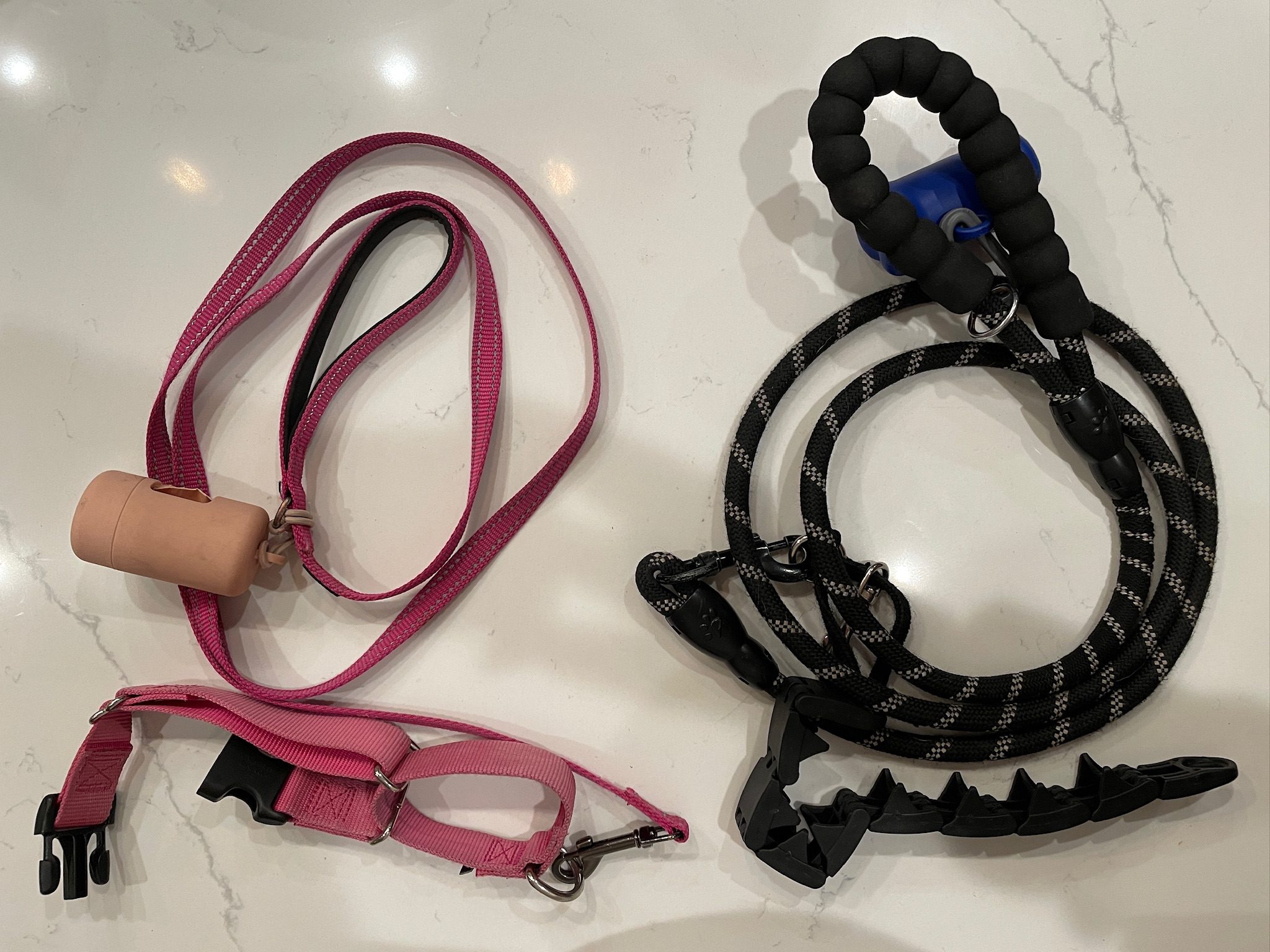
Choosing the perfect leash for your dog can turn a walk from a serene, tail-wagging adventure into a full-blown comedy of errors—or, if you’re lucky, help keep things calm. With so many leash options out there, it’s crucial to match the leash not just to your dog’s unique personality and size, but also to your own walking style (and let’s be honest, your tolerance for chaos). Here’s a look at five different types of dog leashes and how they might fare (or fail spectacularly) with dogs like Beau and Brandy.
- Extendable Leash (Retractable Leash)
The extendable leash is a popular choice for giving dogs more freedom to explore while still keeping them under control. You can adjust the length of the leash, allowing your dog to wander further ahead or stay close by. While this leash is great for well-behaved dogs who enjoy a little extra sniffing room, it can quickly become a nightmare with a dog like Beau. If he suddenly decides to lunge at a passing bicycle, the extra length could spell disaster, leaving you scrambling to reel him back in. For strong or unpredictable dogs, an extendable leash might offer a bit too much freedom.
Plus, let’s talk about durability. Unlike sturdy rope-style leashes, extendable leashes can wear out due to their mechanical parts. And don’t even get me started on the thin extension cord—it can feel like a cheese slicer if it wraps around your leg! I used to use these leashes often, but I’ve since segued to more controllable styles. Personally, I think these are best for small dogs who’ve outgrown their mischievous puppy stage—unlike my wild duo!
The around-the-waist leash is designed for hands-free walking, making it a lifesaver for runners or anyone who likes to multitask. It straps securely around your waist, freeing up your hands while your dog stays by your side. However, the success of this leash depends heavily on the size and temperament of both the dog and the human. For smaller, well-trained dogs, it can make for an enjoyable, easy walk.
But if you’ve got a dog like Beau, who might suddenly decide that chasing after a bicycle is his calling, you could be in for a surprise. The last thing you need is to be yanked off your feet because Beau decided to turn your leisurely walk into an unexpected sprint—or worse, a faceplant. Trust me, around-the-waist leashes and energetic, unpredictable dogs can be a recipe for disaster.
- Double Leash for Two Dogs
The double leash is a must for anyone brave enough to walk two dogs at once. This leash splits into two, allowing you to control both dogs with a single handle. It’s a fantastic solution for dogs that walk well together, like Brandy and Beau on their best behavior. However, if your dogs have different walking styles—say, one likes to zigzag (looking at you, Brandy, who apparently thinks she’s had one too many drinks with her erratic weaving) while the other stops to pee every 30 seconds—this leash can quickly turn into a tangled mess.
In theory, the double leash is a great way to keep both dogs close and under control, but in practice, it requires a lot of coordination from both you and your pups. That said, I’ve found that walking Beau and Brandy with both their leashes in one hand is much easier than keeping them separate, so I’m a fan of this style—when they decide to cooperate, that is.
The standard flat leash is the classic choice and a staple in most dog owners’ collections. It’s simple, durable, and provides a reliable level of control. Available in various lengths and materials, this leash works well for almost any dog, whether you’re walking a calm pup like Brandy or a more unpredictable one like Beau. While it doesn’t offer the flexibility of an extendable leash or the convenience of a hands-free option, it’s a solid, no-nonsense choice that gets the job done. For those moments when you need to keep things straightforward and under control, the flat leash is the way to go.
The no-pull leash is designed specifically to help with dogs that tend to pull on the leash. Often combined with a harness or head collar, this leash helps reduce the strain on your arms and back by distributing the pressure evenly or redirecting your dog’s forward momentum. For a dog like Brandy, who occasionally thinks she’s auditioning for the role of a sled dog, the no-pull leash can be a game-changer. It helps teach her to stay close and walk calmly, rather than turning every walk into a strength contest. This leash can be a lifesaver for owners of strong, energetic dogs who need a little extra help maintaining control.

What’s the Best Leash for Your Pup?
When choosing the right leash, it’s all about understanding your dog’s personality and your own walking preferences. The extendable leash offers freedom but might be risky with strong, unpredictable dogs. The around-the-waist leash is great for multitaskers, as long as your dog isn’t prone to sudden sprints. The double leash can simplify walking two dogs—if they cooperate. The standard flat leash remains a reliable, straightforward option for almost any situation. Finally, the no-pull leash is perfect for training dogs that tend to pull, making walks more enjoyable and less of a workout. Whatever your choice, the right leash can make all the difference in turning your walk into a pleasant stroll rather than a tug-of-war.
Disclaimer: This blog contains affiliate links and if you click one, Beau & Brandy may receive a commission.

Leave a Reply